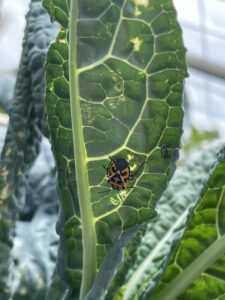

Solution for Harlequin Bugs

Brassicas are dominant in the spring garden. So much of what we grow is in the Brassica genus. The genus Brassica includes vegetables like radish, turnip, bok choy, rapini, mustard, kale, collards, cabbage, cauliflower, broccoli, kohlrabi, and brussels sprouts. This group of plants makes up a large portion of the spring garden, and due to this, there are some pests that can be a major headache for many of them, but there is a simple solution.
Harlequin bugs have quickly become one of the most troublesome pests in the spring vegetable garden in St. Louis. More specifically, those spring vegetables that grow into the later parts of spring. Especially kale, collards, cabbage, cauliflower, broccoli, and brussels sprouts. They can also be a problem on the other brassicas mentioned above, but the pest populations really start increasing in late spring, so the other brassicas, which are faster growing and usually harvested a little earlier, generally have fewer problems with harlequin bugs.
Once harlequin bugs are on your plants, your options for dealing with them are pretty limited, especially if you want to stay organic. So our recommendation is to take a proactive approach. If you are planting any of those slower brassicas that will be in the garden for a while, or any brassicas if you want to be extra safe, consider covering them with insect netting when you plant them.
Insect netting is a fine mesh material that you can put over hoops that you put over your plants. You can use the same structure that you would use for a low tunnel for season extension and just put the insect netting on it instead of plastic or row cover. Insect netting doesn’t retain heat, so you don’t need to worry about overheating. It also lets rain and other water through easily, so you don’t need to remove it to water.
So if you’ve had issues with harlequin bugs in the past, give insect netting a try!